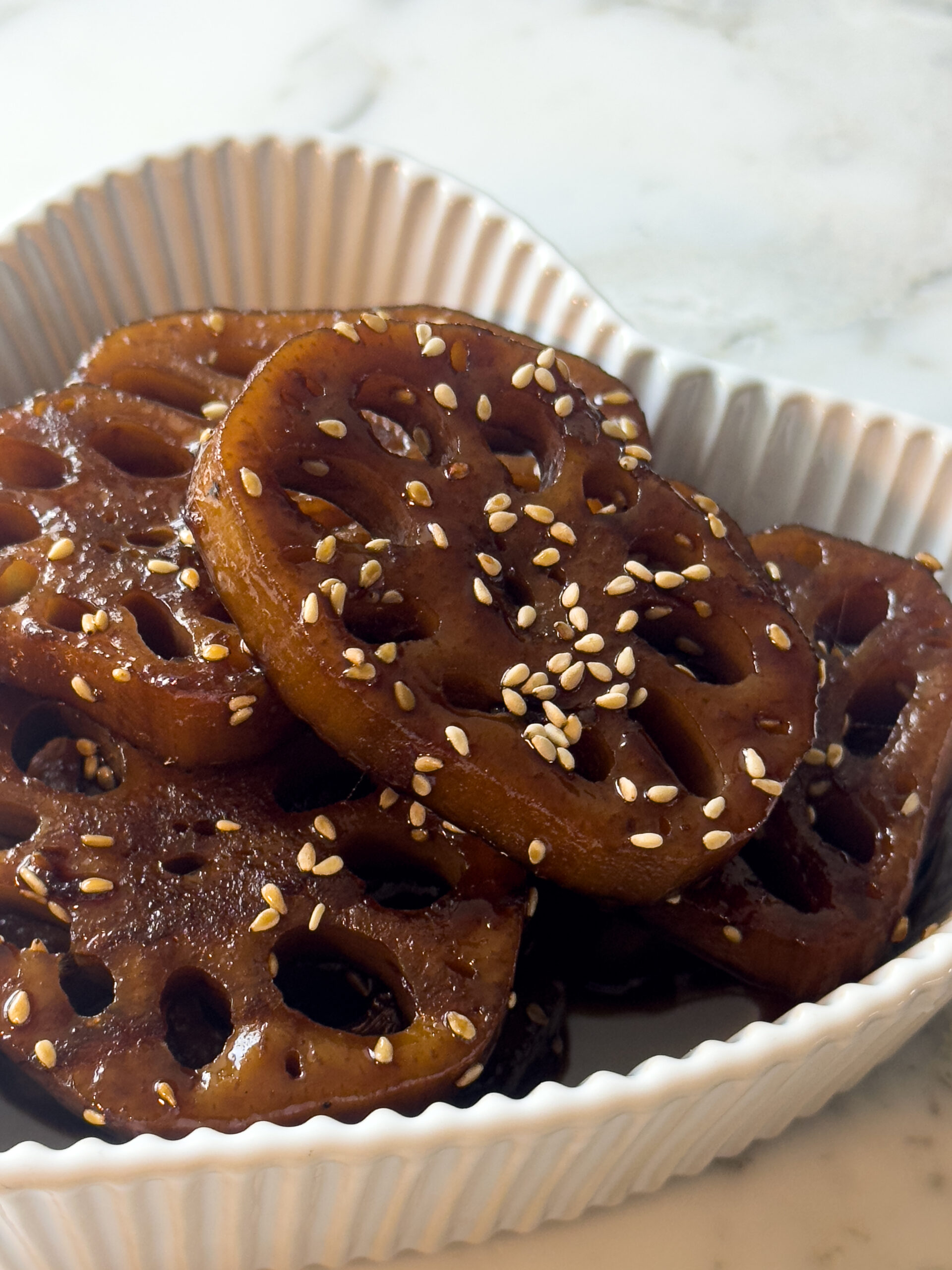
Why Lotus Root Is So Common in Korea
Korea’s warm, humid summers and mild winters create the perfect environment for lotus to grow in ponds, wetlands, and reservoirs. Regions like Buyeo, Anseong, and Gunsan have been cultivating lotus root for generations, making them some of the country’s best-known production areas.
Lotus plants are hardy, resistant to pests, and thrive even in water-rich soil, so farmers have continued to grow them steadily. Lotus root is also easy to store and can be used year-round in side dishes, stews, and salads—fitting naturally into Korean home-cooking traditions.
Because of this, lotus fields and natural lotus habitats are found all across Korea, and summer lotus festivals are held every year. Over time, lotus root has become a familiar and well-loved ingredient in Korean cuisine.
Jump to RecipeNutritional Benefits of Lotus Root
Lotus root isn’t just crunchy and delicious—it’s packed with nutrients.
Rich in Vitamin C | supports immunity and skin health
Lotus root contains a high level of vitamin C, which helps protect the immune system and maintains healthy, elastic skin. It also retains vitamin C fairly well even after cooking.
High in dietary fiber | promotes digestion
Its crunchy texture comes from abundant fiber, which supports gut health, prevents constipation, and helps maintain fullness.
Polyphenols | natural anti-inflammatory and antioxidant effects
The compounds responsible for lotus root’s slight browning also act as antioxidants, helping reduce inflammation in the body.
Potassium-rich | may help with bloating and blood pressure balance
Potassium aids in regulating sodium levels, supporting healthy blood pressure and reducing water retention.
Low in calories, high in satiety
Lotus root is naturally low in calories but filling, making it a great ingredient for balanced or lighter meals.
Because lotus root is both nutritious and widely available in Korea, it’s often enjoyed as a simple everyday side dish. Today, I’m sharing one of the most beloved versions | a glossy, chewy Korean Braised Lotus Root (Yeongeun Jorim).
Tips
- Blanch with vinegar to keep the color bright and remove astringency.
- Use kelp-infused water for deeper, richer flavor.
- Slice evenly (about 1 cm) for consistent texture.
- Lightly sauté to keep the shape, add chew, and help sauce cling.
- Don’t worry—soy sauce reduction darkens but rarely burns.
- Adjust sweetness by increasing or reducing syrup to your liking.
Korean Braised Lotus Root
Ingredients
Main Ingredients
- 650 g lotus root weight after slicing
- 1 tsp sesame oil
- 1 tbsp toasted sesame seeds
- 2 tbsp cooking oil
Sauce (mix beforehand)
- 540 ml water Kelp-infused water adds depth of flavor
- 150 g corn syrup or rice syrup
- 90 g soy sauce
- 2 tbsp mirim Cooking wine
- 1/3 tsp ginger powder optional (Alternatively, add 2 slices of fresh ginger and remove halfway through cooking)
Blanching
- 2 L water
- 2 tbsp vinegar
Instructions
Prep
- Wash the lotus root thoroughly and peel it.
- For deep grooves that are hard to peel, slice first and then peel.
- Slice into 1 cm thick rounds.
Blanching
- Bring 2 liters of water and 2 tbsp vinegar to a boil.
- Add the lotus root. Once the water returns to a boil, blanch for 5 minutes.
- This step prevents discoloration and removes the slightly astringent taste.
- Rinse under cold water and pat dry with paper towels.
Medium-high heat | 2 minutes
- Heat 2 tbsp cooking oil in a deep pan. Add the dried lotus root slices and sauté for 2 minutes.
Medium heat | 20 minutes
- Pour in the prepared sauce, cover with a lid, and simmer for 20 minutes. Stir once halfway through.
Medium heat | 15-20 minutes
- Remove the lid and continue cooking, stirring constantly, until the sauce thickens and clings to the lotus root.
- It may look like it’s about to burn, but it won’t—keep stirring until most of the liquid has evaporated.
- Turn off the heat and finish with sesame oil and toasted sesame seeds. Mix well to coat.
Serving
- Serve warm as a side dish, or chill and enjoy straight from the fridge—it’s delicious either way.
Video
Q&A – Korean Braised Lotus Root
Q. Why do you blanch lotus root with vinegar?
Vinegar prevents discoloration and removes the slight astringency in fresh lotus root.
Q. Can I skip the sautéing step?
It’s not recommended. Sautéing creates an oil coating that helps the lotus root keep its shape, adds chewiness, and lets the sauce cling better.
Q. What if the sauce looks like it’s burning while reducing?
Soy-based sauces naturally darken as they reduce. As long as you stir over medium heat, it won’t burn easily. browned flavour bits, creating a richer base for the sauce.
Q. How long does braised lotus root last in the fridge?
About 5-7 days in an airtight container. The flavor actually deepens as it chills.
Q. Can I use fresh ginger instead of ginger powder?
Absolutely. Add 1–2 slices of fresh ginger during cooking and remove them halfway through.
Q. Is this dish served hot or cold?
Both are delicious! It’s commonly enjoyed cold from the fridge as a meal-prep side dish.
Try This Recipe With Me
If you want to see the exact cooking process,
Watch the full video recipe on my YouTube channel!
It helps my channel so much, thank you for supporting TCOS bite
Lotus root might look unfamiliar, but once you try it, you’ll love its chewy-crunchy texture!
Let me know how it turns out in your kitchen 😊