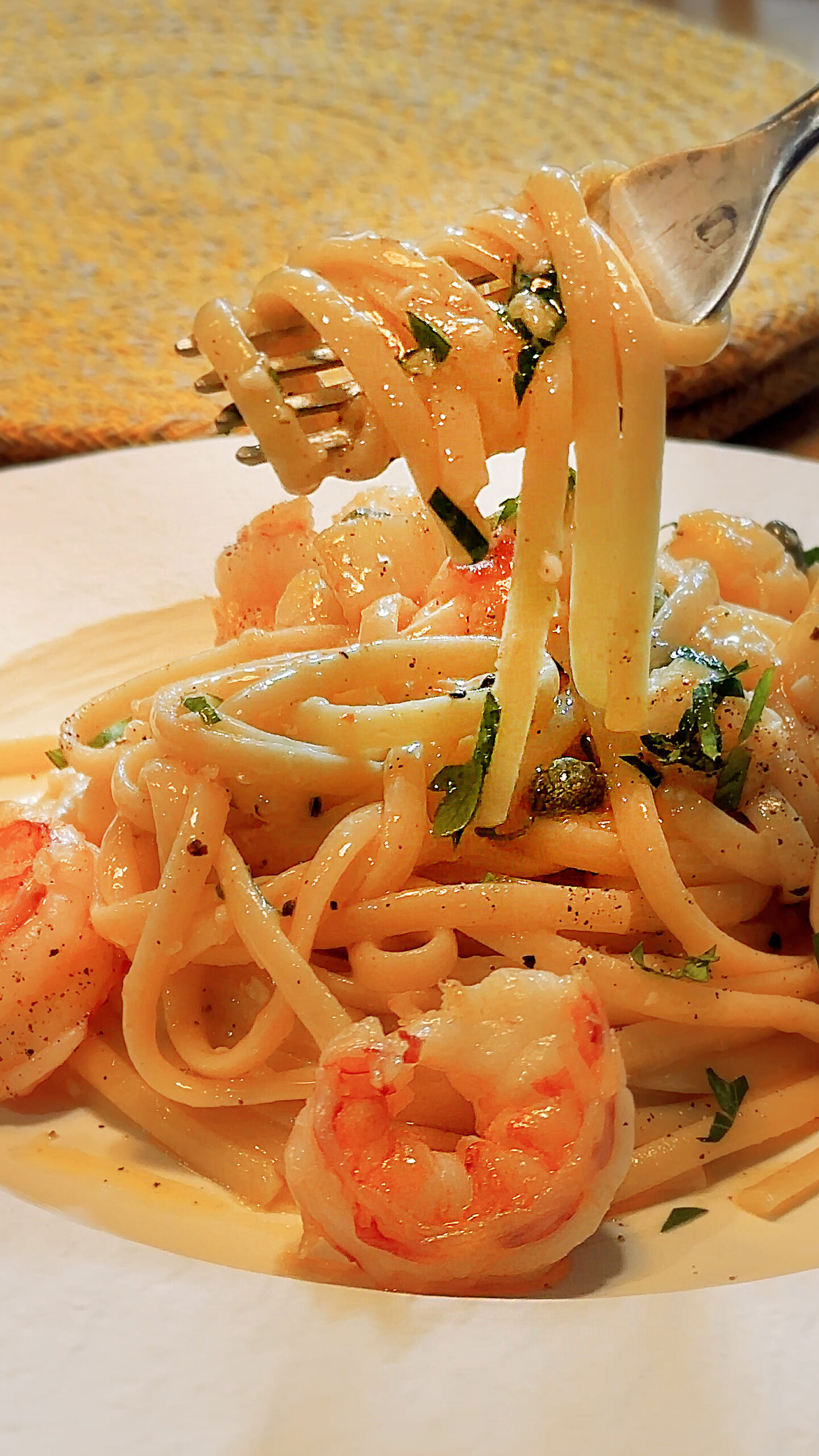
Back in 2016, about nine years ago, I was traveling alone through Italy and decided to spend a few days in Cinque Terre. One evening, I suddenly craved a seafood pasta, so I walked into a little restaurant overlooking the sea. The seafood oil pasta I had there was unforgettable absolutely heavenly. With a glass of white wine, the sound of the waves, and that perfectly cooked pasta, every bite felt precious, almost too good to finish.
Since that day, I’ve been trying to recreate that incredible flavor at home. I experimented, refined, and kept cooking until I finally found my own version. And this pasta is the one dish I can confidently say I’ve mastered. It carries my memories, my effort, and my love for that moment in Cinque Terre.
A Light, Elegant Seafood Pasta
This Seafood Oil Pasta is one of our family’s favourites – a clean, aromatic dish made with prawns, scallops and olive oil. The flavour comes from careful garlic cooking, gentle emulsification and perfectly seasoned pasta water. It’s simple, elegant and full of subtle seafood sweetness.
I used prawns and scallops today, but squid works wonderfully in this dish too.
The capers bring a bright, sharp lift through the middle, making each mouthful even more vibrant.
Do give it a try.
Tips
- Cook garlic gently over low heat and never let it burn.
- Use a spatula to scrape the sides and bottom of the pan to release all the flavour.
- Season the pasta primarily using the saltiness of the pasta water.
- When beginning the final 3 minutes of pan-cooking, add boiling water to keep the sauce loose. If it tastes under-seasoned, add a little pasta water. If the seasoning is correct, add boiling water instead and continue cooking until the pasta is done.
Seafood Oil Pasta
Ingredients
Pasta
- Linguine 160g 80g per person
- Water 2L
- Sea salt 14g 7g per 1L
Main Toppings
- 10 prawns
- 20 small scallops
Sauce
- 2 tbsp pure olive oil can substitute with cooking oil
- 20 g unsalted butter
- Salt — a pinch when searing the prawns and scallops
- 2 sprigs parsley — leaves finely chopped stems reserved for aroma
- 4 cloves garlic — finely minced
- 2 peperoncino — chopped seeds removed
- 40 g extra-virgin olive oil EVOO + extra for drizzling
- 15 g capers
- Black pepper white pepper optional
- 30 g Pecorino cheese 20g during cooking, 10g for serving
Instructions
Sear the Prawns and Scallops | Medium heat, 3 minutes
- Heat pure olive oil in a pan.
- Once hot, add the butter.
- As soon as it melts, add the prawns and scallops and cook for 3–4 minutes until done.
- Remove and set aside.
Build the Aromatics | Low heat, 2–3 minutes
- In the same pan, add 2 tbsp pasta water (or regular water) to lower the temperature and deglaze the flavourful browned bits.
- Add olive oil, then garlic, peperoncino and parsley stems. Allow them to gently infuse the oil.
- Before the garlic begins to colour, add one ladle of pasta water to create the sauce base.
- Scrape the bottom of the pan with a spatula to release all the flavour.
- If anything has burnt, do not scrape it off — switch to a clean pan.
- Turn off the heat and wait until the pasta is ready to be added.
Finish the Pasta in the Pan | Medium heat, 3 minutes
- When the linguine has about 3 minutes left before reaching your preferred doneness, transfer it to the pan with the sauce.
- As the sauce is already seasoned with pasta water, add one ladle of boiling water to keep it loose and prevent over-salting.
- Toss or shake the pan to help the pasta starch emulsify the sauce.
Mantecatura | Off the heat
- When a little sauce remains and the pasta is coated, turn off the heat.
- Add parsley leaves, black pepper and capers, then toss gently.
- Add Pecorino cheese and finish with a final toss until glossy and fully coated.
Plating
- Twirl the linguine onto a plate.
- Top with the reserved prawns and scallops.
- Finish with parsley and black pepper.
Serving
- Serve with white wine and warm crusty bread.
Video
Q&A – Seafood Oil Pasta
Q. Why do I need to mince the garlic very finely?
Because finely minced garlic cooks quickly before the olive oil overheats, giving the dish a clean aroma without burning or bitterness.
Q. Why must the garlic never burn?
Burnt garlic turns the whole sauce bitter and will overpower the delicate seafood flavour.
Q. Why do we add a splash of water before making the aromatics?
It lowers the pan temperature and helps release the browned flavour bits, creating a richer base for the sauce.
Q. Why should I add boiling water, not pasta water, during the final 3 minutes?
Because the sauce is already seasoned from the pasta water used earlier. Boiling water keeps the sauce loose without over-salting.
Q. Why do capers work so well in this dish?
They add a bright, sharp acidity that cuts through the richness and lifts the seafood flavour.
Q. What is mantecare and why is it important?
Mantecare is the final off-heat tossing that makes the sauce glossy and smooth. It’s the key to coating the pasta evenly.
Try This Recipe With Me
If you want to see the exact cooking process,
Watch the full video recipe on my YouTube channel!
It helps my channel so much, thank you for supporting TCOS bite
A Shorts version of this recipe will be uploaded today at 5 PM(KST). Stay tuned!